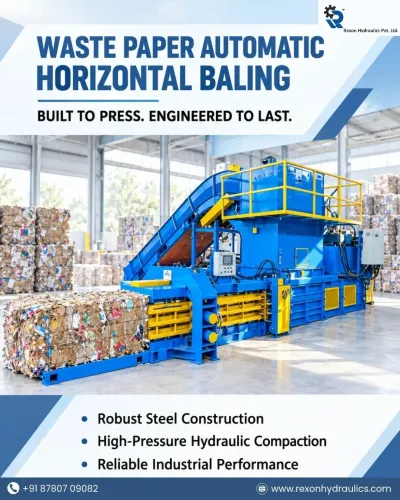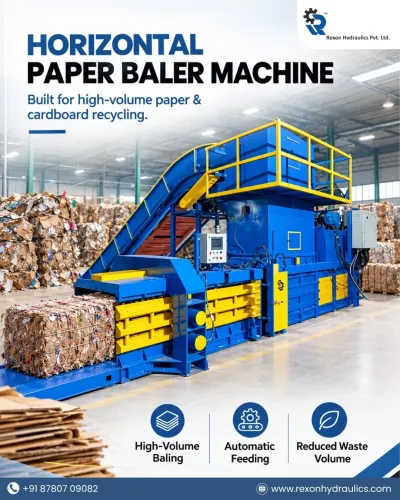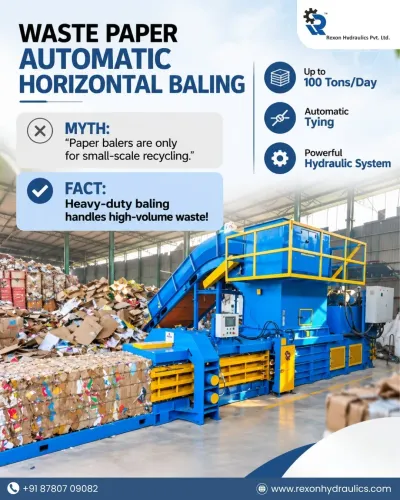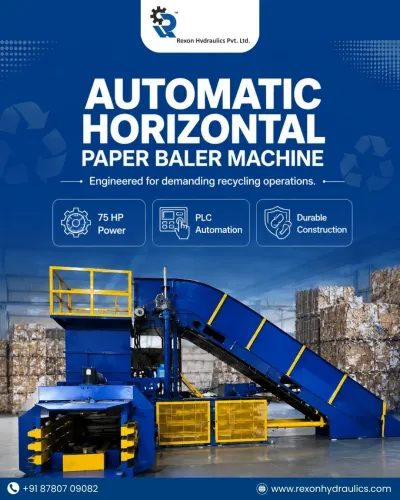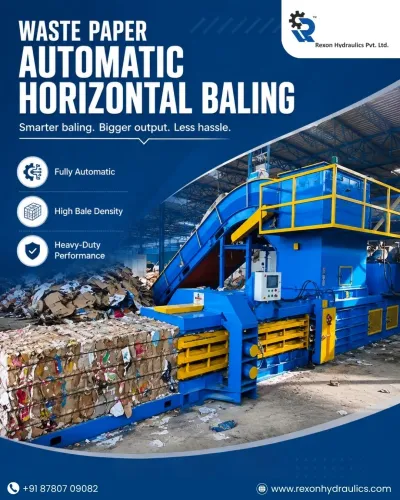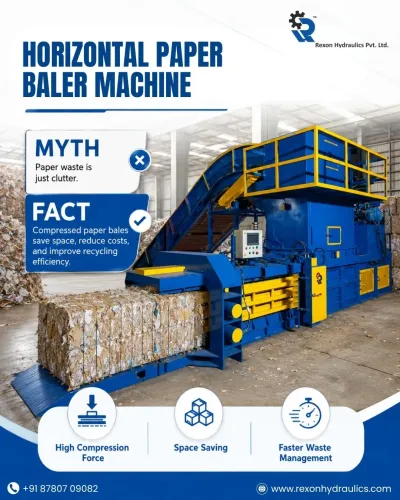
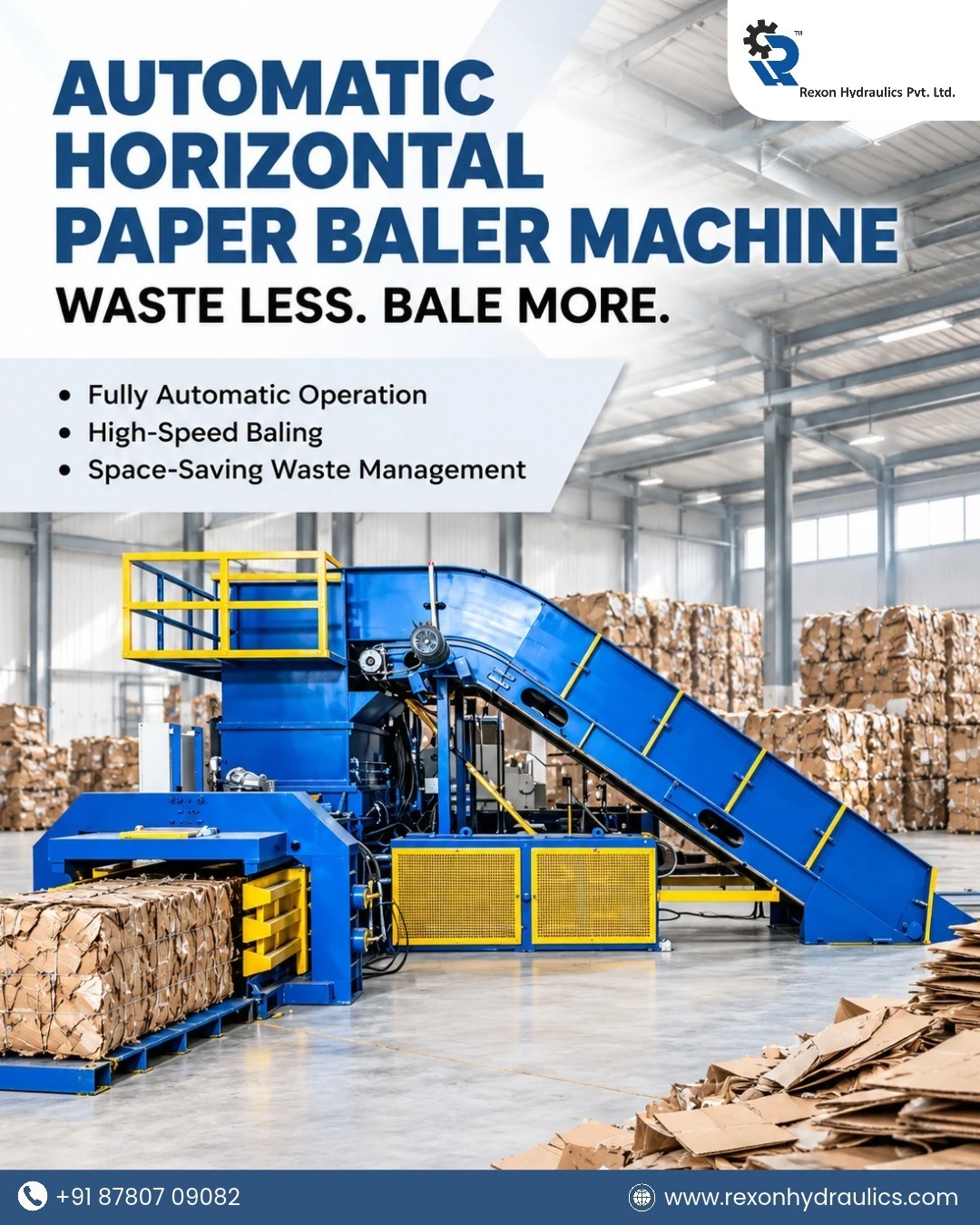
Recycling plants, warehouses, printing facilities, and packaging companies often struggle to handle large quantities of waste paper and cardboard. Loose materials take up valuable floor space, require frequent handling, and make waste storage difficult. An Automatic Horizontal Paper Baler Machine addresses these challenges by compressing recyclable waste into dense, uniform bales, making storage more organized, transportation easier, and recycling operations more efficient.
Rexon Hydraulics Pvt. Ltd. provides hydraulic machinery solutions for industrial applications. With a suitable paper baling system, businesses can organize recyclable waste more effectively, reduce manual handling, and improve overall waste management efficiency.
What Is an Automatic Horizontal Paper Baler Machine
An automatic horizontal paper baler machine compresses discarded paper, cardboard, and other suitable recyclable materials into compact, tightly bound bales using hydraulic force, making waste handling, storage, and transportation easier. Its horizontal configuration supports structured material feeding, compression, and bale discharge.
Depending on the machine design, automatic feeding and bale-tying functions can help maintain a continuous workflow while reducing repetitive operator involvement. By turning loose paper waste into compact bales, this equipment simplifies stacking, storage, and transportation, making it a practical solution for industries that produce substantial amounts of recyclable materials.
Key Features That Support Efficient Baling
1. Automated Material Processing
Automation streamlines feeding and compression. The level of automation varies by machine model and the facility’s operational needs.
2. Hydraulic Compression Mechanism
The hydraulic system applies controlled pressure to compact loose paper and cardboard into dense, easy-to-handle bales. Final bale dimensions and density vary based on the material being processed and the machine’s technical specifications. Bale size and density depend on the material type and machine specifications.
3. Horizontal Baling Design
The horizontal arrangement supports organized material handling and can suit industrial facilities with regular volumes of paper and packaging waste.
4. Consistent Bale Formation
Controlled compression creates compact bales that are easier to handle, store, and prepare for recycling or transport.
5. Industrial Waste Management Support
Depending on its specifications, the machine can handle waste paper, corrugated cardboard, cartons, and other suitable recyclable materials.
Benefits of Using an Automatic Paper Baling Machine
Installing an Automatic Horizontal Paper Baler Machine can provide several practical advantages:
* Better space utilization: Compresses loose waste into compact bales, freeing up storage space.
* Reduced manual handling: Automation can minimize repetitive waste-processing tasks.
* Improved workplace organization: Helps keep paper and cardboard waste in a designated handling area.
* Simplified transportation: Compact bales are easier to stack and move.
* More organized recycling: Prepared materials can be transferred to recycling facilities more efficiently.
* Streamlined operations: A dedicated baling process helps businesses manage recurring waste volumes systematically.
The actual benefits depend on daily waste generation, machine capacity, material characteristics, and operating conditions.
Which Industries Can Benefit from Horizontal Paper Balers
An automatic paper baler can support waste management in a range of sectors:
* Recycling plants: Compressing collected paper and cardboard.
* Warehouses: Managing cartons and packaging waste.
* Printing facilities: Processing suitable paper offcuts and production waste.
* Packaging companies: Baling discarded cardboard and paper materials.
* Retail businesses: Organizing used shipping boxes and cartons.
* Manufacturing units: Managing compatible recyclable waste generated during operations.
How to Choose the Right Paper Baling Machine
Before investing in a machine, assess your daily waste volume, material type, required bale dimensions, available floor space, and desired operating capacity. Also review feeding arrangements, tying mechanisms, hydraulic system requirements, safety features, and maintenance needs.
Businesses searching for an Automatic Horizontal Paper Baler Machine Manufacturer in Ahmedabad should compare technical specifications and confirm that the equipment matches their actual waste-processing requirements. Similarly, when selecting an Automatic Horizontal Paper Baler Machine Supplier in Gujarat, consider equipment suitability, installation support, spare parts, and after-sales service.
For companies looking for an Automatic Horizontal Paper Baler Machine in India, choosing a machine based on operational needs, not price alone, can support dependable long-term performance.
Frequently Asked Questions
1. What materials can an automatic horizontal paper baler process?
Depending on the model, it can process waste paper, corrugated cardboard, cartons, and other compatible recyclable materials. Confirm material suitability with the manufacturer before purchase.
2. How does a paper baler help save storage space?
The machine compresses loose paper and cardboard into compact bales, allowing you to stack materials more efficiently and reduce the space needed for waste storage.
3. Is an automatic horizontal paper baler suitable for high-volume waste?
It can suit facilities that generate substantial amounts of recyclable waste. The correct machine capacity depends on daily throughput and the required operating schedule.
Keywords